Lost houses and industrial heritage of the Balmain peninsula
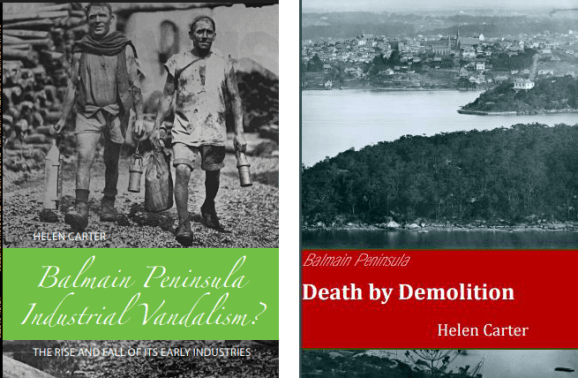
Join local researcher and author Helen Carter for fascinating insights from her two books into the vanished houses of Balmain, Birchgrove and Rozelle, as well as the Balmain peninsula’s lost industrial heritage. Her talk includes photographs, advertisements and plans that help visualise these early buildings and industries, together with the lives of their owners, occupants and business owners.
About the Speaker
Helen Carter – Author of the Balmain Peninsula series, Death by Demolition and Balmain Peninsula – Industrial Vandalism?, has lived in Birchgrove for 30 years. Her studies in Australian history at the University of New South Wales, together with her love of old houses and Australian 19th century photography, provided the ideal background for the writing of these two books.
All proceeds to the Balmain Association for the preservation of the Watch House in Darling Street, Balmain.
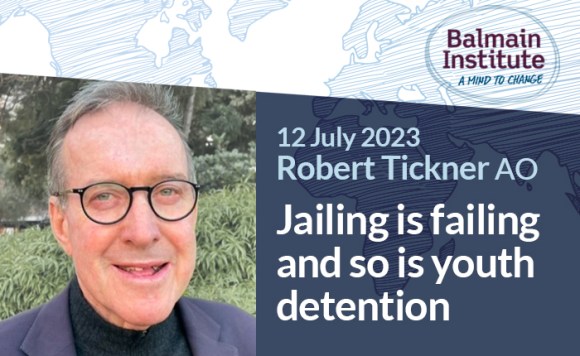
Time to turn to evidence based alternatives which break the cycle of incarceration
The Justice Reform Initiative is a new national organisation which seeks to shift the public conversation and public policy in Australia away from building more and more prisons and youth detention centres and instead to turn to evidence based alterneratives which break the cycle of offending and turn lives around.
Australia spend almost $6 Billion each year just in operational costs of prisions and youth detention centres. This does not address the underlying issues giving rise to contact with the criminal justice system by many people including a massively disproportionate number of First Nations people. We need to invest instead in mental health and substance dependency programs, employment, housing, literacy, family violence prevention and other drivers of contact with the criminal justice system.
About the Speaker
Robert Tickner AO is Australia’s longest serving Minister for Aboriginal and Torres Strait Islander Affairs and among other things was the Minister who co-ordinated the national response to the Royal Commission into Aboriginal Deaths in Custody. During his time in the portfolio, he fought hard for Indigenous rights and wrote about his experiences in his book “Taking a Stand”.
Prior to his election to the national parliament Robert worked as a solicitor with the Aboriginal Legal Service in Redfern. After political life Robert was CEO of Australian Red Cross for ten years and acted as the Under Secretary General of the International Red Cross and Red Crescent Federation in Geneva. Robert has also published another book titled “Ten Doors Down” which outlines his journey to find his birth family as an adopted person.
PANEL DISCUSSION Pathways to carbon neutral communities
A carbon neutral community is one that makes no net contribution of C02 to the atmosphere. In this meeting we will take a broad look at what this might entail. The meeting will take the form of a panel discussion led by Sarah Dingle, well known journalist and ABC presenter.
Sarah Dingle is a dual Walkley Award-winning investigative reporter and presenter with the ABC, working across radio and TV current affairs, news and documentary.
Contributors to the discussion include Gavin Gilchrist, Project Manager, Inner West Community Energy; Kate Wild, Award-winning current affairs and investigative journalist;Michal Levy, Artist and Environmental activist, both with the Sydney Alliance, andDrMargaret Vickers, Science Educator, and Inner West Community Energy/Community Batteries.
The topics
1. Australia’s electricity supply system is undergoing a revolution, as renewables (PV solar, wind, hydro etc) start to replace coal fired power plants. A large proportion of our future power input will come from rooftop solar panels, but this is creating a challenge for those who manage the grid and the electricity supply system. Rooftop solar input is a ‘wild card’ and at present, on a sunny day, there may be more power entering the network than the system can manage. When this happens, the solar power is discarded, or ‘curtailed’. Community batteries can take up this otherwise wasted energy and store it, releasing it to the grid at night time. This strategy provides the rationale for the Labor government’s plan to install 400 community batteries across the nation.
2. Energy efficiency- especially in relation to low-income rental properties Many Australian homes are very poorly insulated, leading to a massive wastage of energy. We are just beginning to see the uptake of very efficient smart appliances such as fridges, washing machines, ovens, cook tops, reverse cycle water heaters and air conditioners, etc. However, approximately one-third of all Australians live in low-income rental or community or public housing. Their units are almost always poorly insulated and poorly maintained. This represents both a significant equity issue. Without insulation, without approptiate maintenance and without efficient appliances, our poorest citizens are now paying the highest power bills. Recent research indicates that household income and power bills are inversely correlated! (The lower your income, the more you pay for gas and electricity). This collection of problems also represents a serious gap in our overall emissions-reduction strategy.
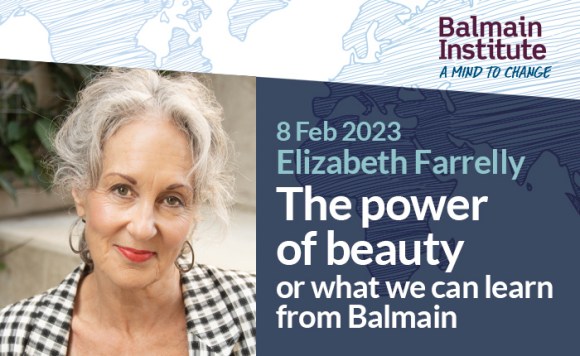
The Power of Beauty – or what we can learn from Balmain
We are richer and freer than ever, yet we continue to make cities that few of us like. Now, they threaten our very survival. Cronyism, uglification, sprawl, heritage destruction, misappropriation of public land, flogging of public assets, carbon emissions, habitat clearing and urban heat: at the heart of them all lies a fallacy; the idea of city as profit-machine rather than a ground of shared connection. Perhaps it is time for a reset. What, asks Dr Elizabeth Farrelly, can we learn from old, unplanned and beloved environments like Balmain.
About Elizabeth
Elizabeth Farrelly is a columnist, essayist, novelist, critic and speaker. Trained in architecture, science and philosophy, she is fascinated by how humans engage with nature to make culture. Over thirty years her Sydney Morning Herald column on urbanism, planning, planting, climate, politics and public art has seen city-making go from back-page news to headline material. With a PhD in Sydney urbanism, Farrelly has been Assistant Editor of the Architectural Review in London, a City of Sydney Councillor, Associate Professor (Practice) in the Australian Graduate School of Urbanism at the University of NSW and inaugural chair of the Australia Award for Urban Design.
With recent reports of the gender pay gap widening, greater numbers of women dropping out of the workforce, and the ongoing reports of sexual harassment, sexual assault and domestic and family violence, Edwina and Alison will reflect on the current status of gender equality in Australia, specifically for people living in poverty. They will explore the impacts of COVID on work, caring and families, responses needed for women’s safety, and how economic decisions can entrench or challenge gender inequality.
About the speakers
Edwina MacDonald (she/her)
Edwina is Deputy CEO at the Australian Council of Social Service, the peak body for the Australian community services sector. She has over two decades of experience in driving change on social issues and social justice, human rights, gender equality and civil society, and has worked on research, policy and advocacy in government, university and community sectors.
Alison is a feminist human rights advocate and activist is currently the Director, Policy Advocacy and Research at Chief Executive Women. She has previously held policy roles promoting gender equality and human rights in the federal government, the Australian Human Rights Commission, and in community legal centres. She has also promoted gender equality and human rights through international development projects, and through her work with feminist movements and organisations across the Asia Pacific.
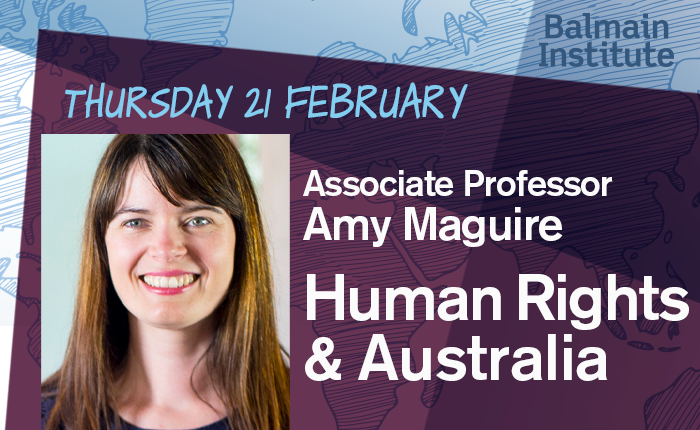
What are human rights and how does Australia’s performance stack up against its international human rights obligations?
Amy Maguire specialises in public international law and human rights at the University of Newcastle Law School. She is a sought-after commentator on international legal and human rights issues for Australian and international television, radio, online and print media and a featured author for The Conversation. Amy contributes to evidence-based policy-making through submissions to government inquiries in her fields of expertise. She has published widely in highly-regarded academic journals and edited books.
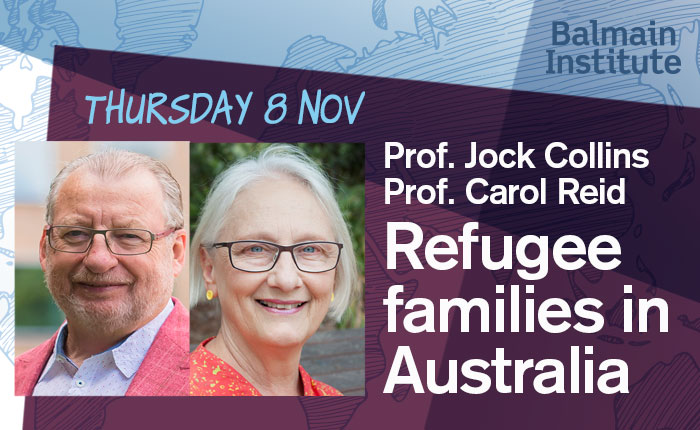
Refugee politics in Australia is the most divisive and controversial aspect of our immigration policy. Jock Collins and Carol Reid will present an overview of their current research through which members of 250 families from Syria, Iraq and Afghanistan have been interviewed across the Eastern States.
Despite prejudice-flamed opinions to the contrary, their research suggests that new refugees are settling well into Australia, are very thankful to be here, are eager to contribute to our society, but employment remains a challenging issue.
Jock Collins is Professor of Social Economics at the UTS Business School. He has been conducting research on Australian immigration since the early 1970s. He currently holds four Australian Research Council grants, two of which relate to refugee settlement in Australia.
Carol Reid is Professor of Sociology of Education in the Centre for Educational Research, Western Sydney University. For the last four decades she has been involved in education for culturally diverse populations. Her recent research focuses on the settlement of refugees, compulsory education for ethnic minorities in Sydney, and immigrant teachers in Australia. She has published six books and more than 80 articles on these topics.
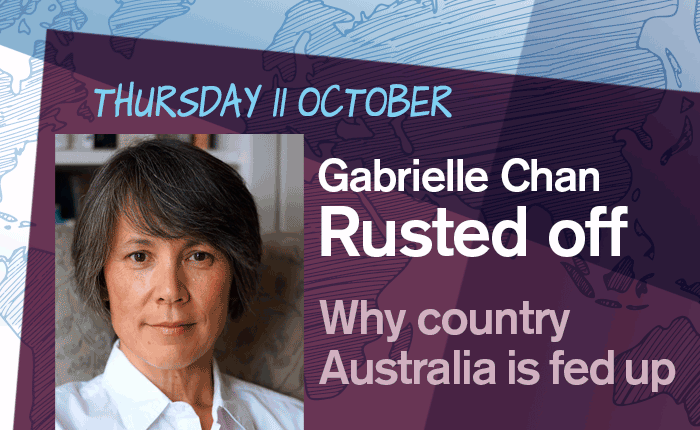
The daughter of a Singaporean migrant, Gabrielle moved from the Canberra press gallery to marry a sheep and wheat farmer in 1996 – the year Pauline Hanson was first elected to federal parliament. She noticed the economic and cultural divide between the city and the country, the differences in political culture and yawning gap between the parliament and small town life.
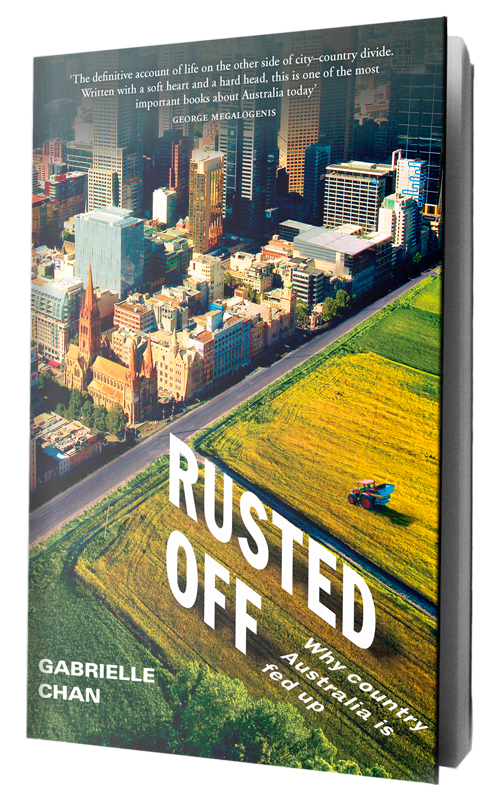
In September 2017 she swapped interviews with politicians with interviews with ordinary people on her main street to discover why they think politics has moved so far from their lives. The result is Rusted Off: Why country Australia is fed up. In the process, Gabrielle draws conclusions about the current state of our rural political representation, the gap between city and country and how to bridge it.
Gabrielle Chan has been a journalist for more than 30 years. She has been a political journalist and politics live blogger at Guardian Australia since 2013. Prior to that she worked at The Australian, ABC radio, The Daily Telegraph, in local newspapers and politics. Gabrielle has written and edited history books, biographies and even a recipe book.
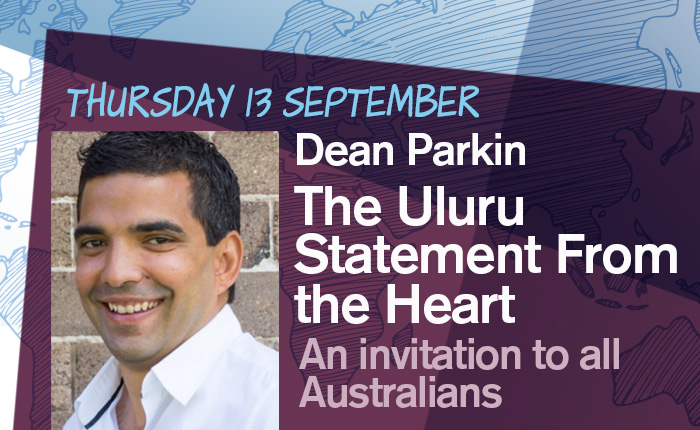
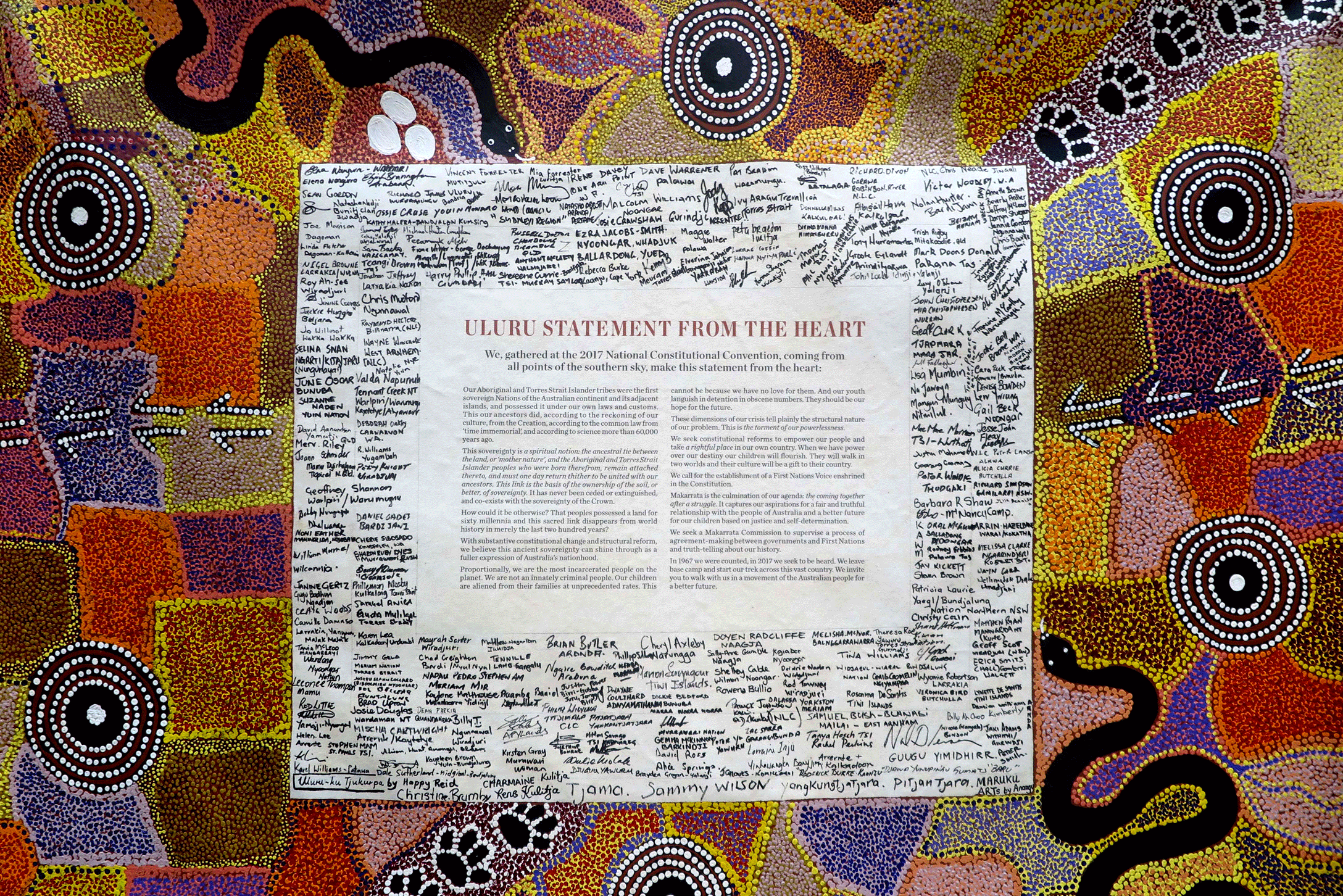
Dean Parkin was closely involved in the process leading to the Statement and will take you on a deeper exploration and the invitation it gives to the Australian people.
Dean is the Executive Director of the Uluru Education Project, which aims to drive public awareness of the Uluru Statement From the Heart that was developed by Aboriginal and Torres Strait Islander Peoples in May 2017.
An experienced independent management consultant, Dean has worked across the public, corporate, not-for-profit and political sectors at national, regional, and local levels. He has advised a range of clients on strategy, engagement and co-design, and in addition to extensive experience in Aboriginal and Torres Strait Islander affairs, he has commercial experience both in Australia and the UK.
Dean is from the Quandamooka peoples of Minjerribah (North Stradbroke Island) in Queensland and works with his community on their Native Title journey. Dean has a Bachelor of Arts (Politics and Journalism) from the University of Queensland. He is an inaugural Fellow of the Atlantic Fellowship for Social Equity (University of Melbourne) and is a board member of the NAISDA Dance College, Australia’s premier Indigenous training college.
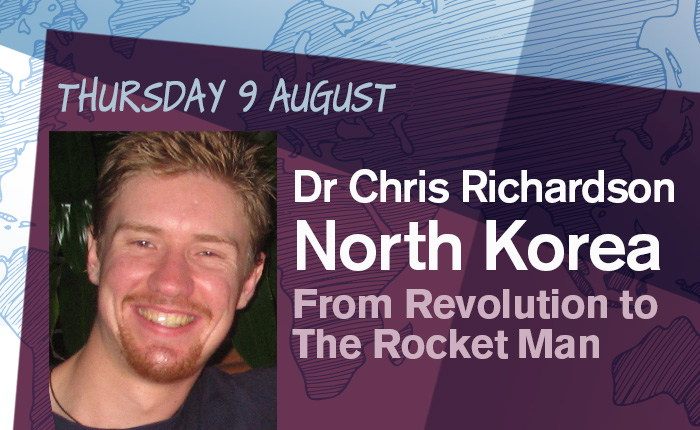
What challenges and opportunities face North Korea in it’s 70th year – and our region and the world?
Dr Christopher Richardson
North Korea’s model of totalitarianism has proved remarkably resilient and resistant to change. As the 70th anniversary of the state’s foundation looms, Dr Christopher Richardson explores North Korea’s past, present and future, with an emphasis on the evolution and imposition of the Kim Family Cult of Personality and the consequences of this Kim Cult for the state’s security and military posture, its culture and daily life (with a special emphasis on children’s lives).
Dr Christopher Richardson from Sydney University is an expert on North Korea with a particular focus on policies affecting children. He has published widely in both academic and fictional modes and is author, among other things, of a novel for children – Empire of the Waves: Voyage of the Moon Child.
Recommended reading on North Korea
Dear Leader Jang Jin-sung (London: Rider Books, 2014)Nothing to Envy: Ordinary Lives of North Koreans Barbara Demick (New York: Spiegel and Grau, 2009)The Cleanest Race: How North Koreans See Themselves and Why It Matters Brian Myers (New York: Melville House, 2010)
Traditional media are being disrupted by digital technologies. If civility and progress are to survive the current communication tornado we need a restoration of the basic rules for reflective discourse and a redirection of our engagement with public policy.
Kim Williams
Kim Williams AM has had a long involvement in the arts, entertainment and media industries in Australia and internationally. He has held various executive leadership positions since the 1970s, including: chief executive at News Corp Australia; FOXTEL; Fox Studios Australia; the Australian Film Commission; Southern Star Entertainment and Musica Viva Australia; as well as a senior executive at the Australian Broadcasting Corporation.
Mr. Williams was the chief executive of the subscription broadcaster FOXTEL for the decade up until November 2011. At FOXTEL he pioneered many of the major digital broadcast innovations in Australia.
He is currently the Chairman of Trustees of the Thomson Reuters Founders Share Company and an AFL Commissioner.MUP (Melbourne University Publishing) published his book Rules of Engagement in 2014.
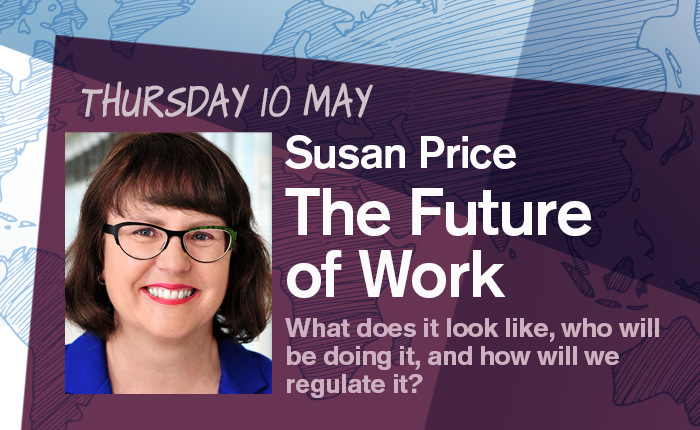
What does it look like, who will be doing it, and how will we regulate it?
How can we re-think the very concept of work to make sure that work works for as many of us as possible?
Susan Price is an experienced employment lawyer and diversity consultant.
She has worked in private practice, most recently with PwC, as well as in-house.
Susan is one of the inaugural Fellows of the University of Sydney Policy Lab, and is also an Honorary Affiliate of the Business School in the Discipline of Work and Organisational Studies. Susan has a keen interest in the future of work and how it will be regulated. She is an active member of Women Lawyers NSW, and sits on the boards of Epilepsy Action and the Bondi Beach Cottage.
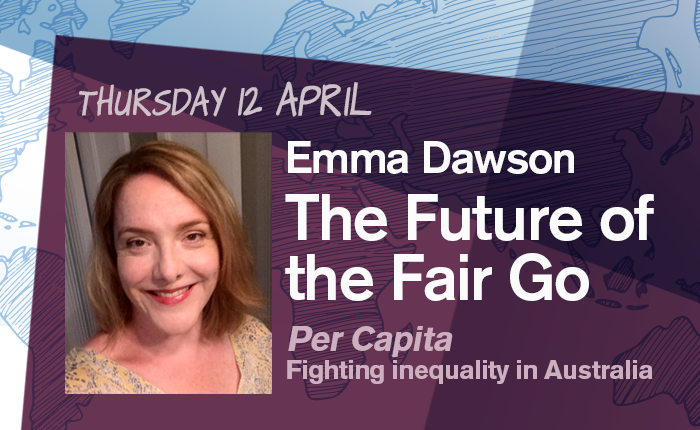
The link between hard work and good living standards in Australia is broken. We need to find out why, and how to fix it. Australian workers deserve their fair share of prosperity in one of the wealthiest nations on earth.
Emma Dawson
Emma Dawson is the Executive Director of Per Capita.
Per Capita is an independent progressive think tank, dedicated to fighting inequality in Australia. We work to build a new vision for Australia based on fairness, shared prosperity, community and social justice.
Formerly, Emma was a senior advisor on Digital Inclusion at Telstra, Executive Director of the Institute for a Broadband Enabled Society at the University of Melbourne, and a senior policy advisor in the Rudd and Gillard governments.
Emma has published articles and opinion pieces on a wide range of public policy issues, which have appeared in the Sydney Morning Herald, The Age, the Guardian, The Australian, and a number of online publications. She is a regular panellist on The Drum on ABC TV and various Sky News programs.
Emma holds a BA with First Class Honours from LaTrobe University and an MA with Distinction from Monash University. She sits on the board of the Prader-Willi Research Foundation Australia and is an Honorary Fellow in the School of Social and Political Inquiry at the University of Melbourne.
It’s 2018, and women still face sexual harassment and discrimination at work and in public life. What can the eighteenth century teach us about how we got into this mess, and how to fix it?
Dr Olivia Murphy is the author of Jane Austen the Reader, and has published widely on eighteenth and early nineteenth century literature and culture. She is currently a postdoctoral research fellow, Department of English, Sydney University.
The Bentley Effect documents the highs and lows of the battle to keep a unique part of Australia gasfield-free. This timely story of a community’s heroic stand shows how strategic direct action and peaceful protest from a committed community can overcome industrial might and political short-sightedness.
The screening will be followed by a short Q&A with Naomi Hogan
Naomi has a science communications background and is the National Coordinator for the Lock the Gate Alliance. For the past six years she has been fighting CSG and fracking alongside impacted communities in Australia.
While most recently ‘wind farms’ have been in the news for their capacity to disrupt (or not!) power generation in South Australia, at this event Professor Simon Chapman will provide an update on research into the human health impacts of wind energy and the role he has played in trying to bring some sense to the often emotional and ill-informed debates about it.








 Balmain Institute Inc.